
The Evidence Problem
A resume is the entire case file for most hiring decisions
That's not a knock on recruiters — there's rarely been an alternative at volume. A resume is a document the candidate wrote about themselves, increasingly generated or tuned to beat a keyword filter. A recruiter skims it for a few seconds and decides. At hundreds of applications a role, that skim is the entire evidentiary basis for almost every advance or reject.
Aplaix adds a second, independent source of evidence — what the candidate actually said when asked about the role — then does the reading a recruiter has no time to do at volume, and shows its work.
Two Sources, Not One
Two sources instead of one
The resume says what a candidate claims about themselves. The interview shows what they can actually articulate about the role, on the spot. These are independent sources of evidence — and the interview is the one a candidate can't outsource to a keyword optimizer or a resume-writing service.
The resume
What a candidate claims about themselves, written in advance, optimized to pass a filter.
The interview
What they can actually say about the role, unscripted, answered on the spot.
Evidence, Attributed
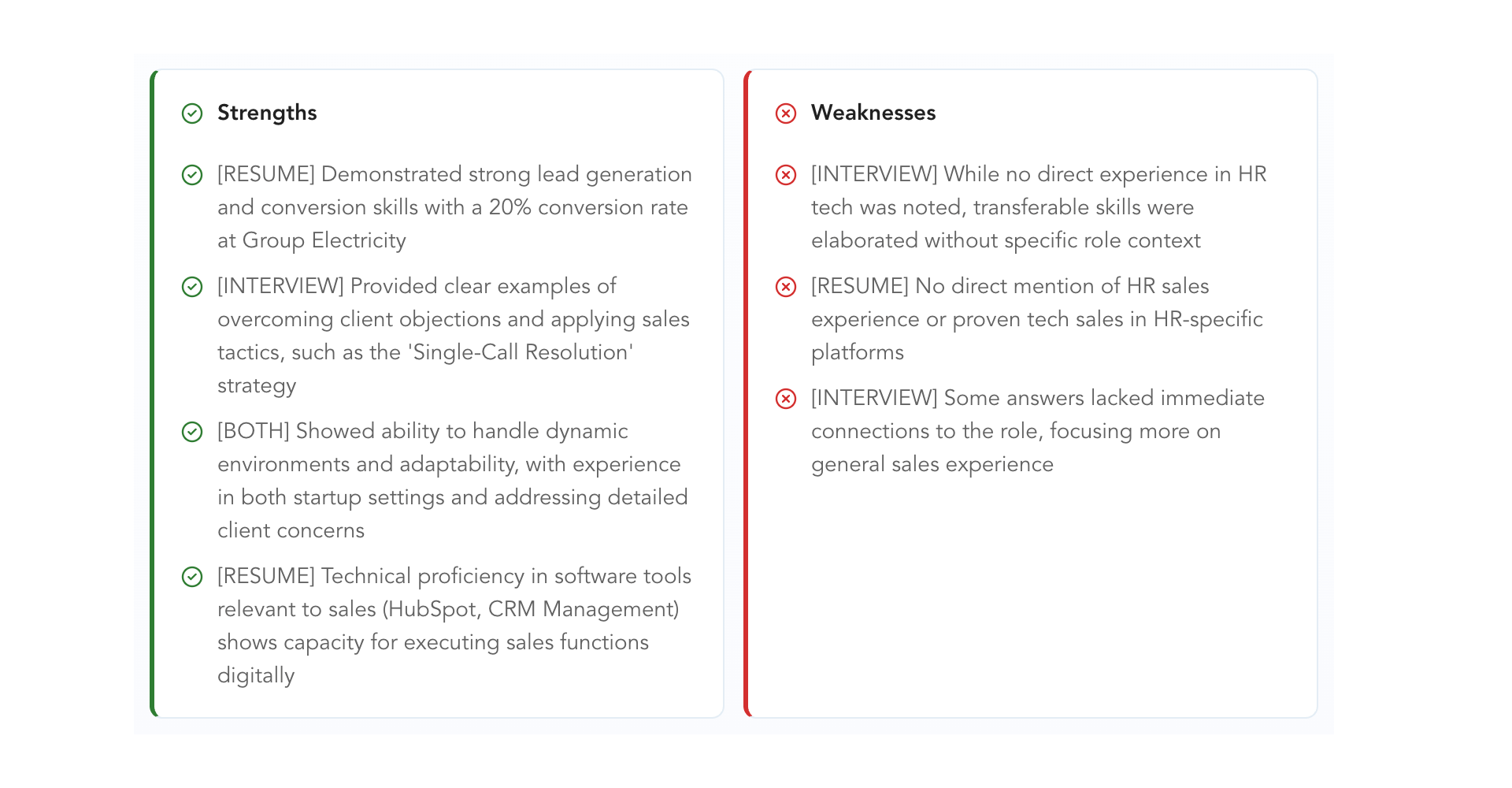
Every strength and weakness is tagged with where it came from
A claim corroborated by both sources is stronger evidence than either alone. A resume claim the interview failed to support is a signal in itself — not a penalty, a data point. No other tool in this category shows a decision maker why it concluded something, with the source attached.
From the resume
A claim that shows up in the application material but hasn't been tested out loud yet.
From the interview
Something said in response to a real question, with no chance to look it up first.
From both
The strongest kind of evidence: the resume claim and the interview answer agree.
Source-tagged strengths and weaknesses (detail)
Shown As Parts, Not One Number
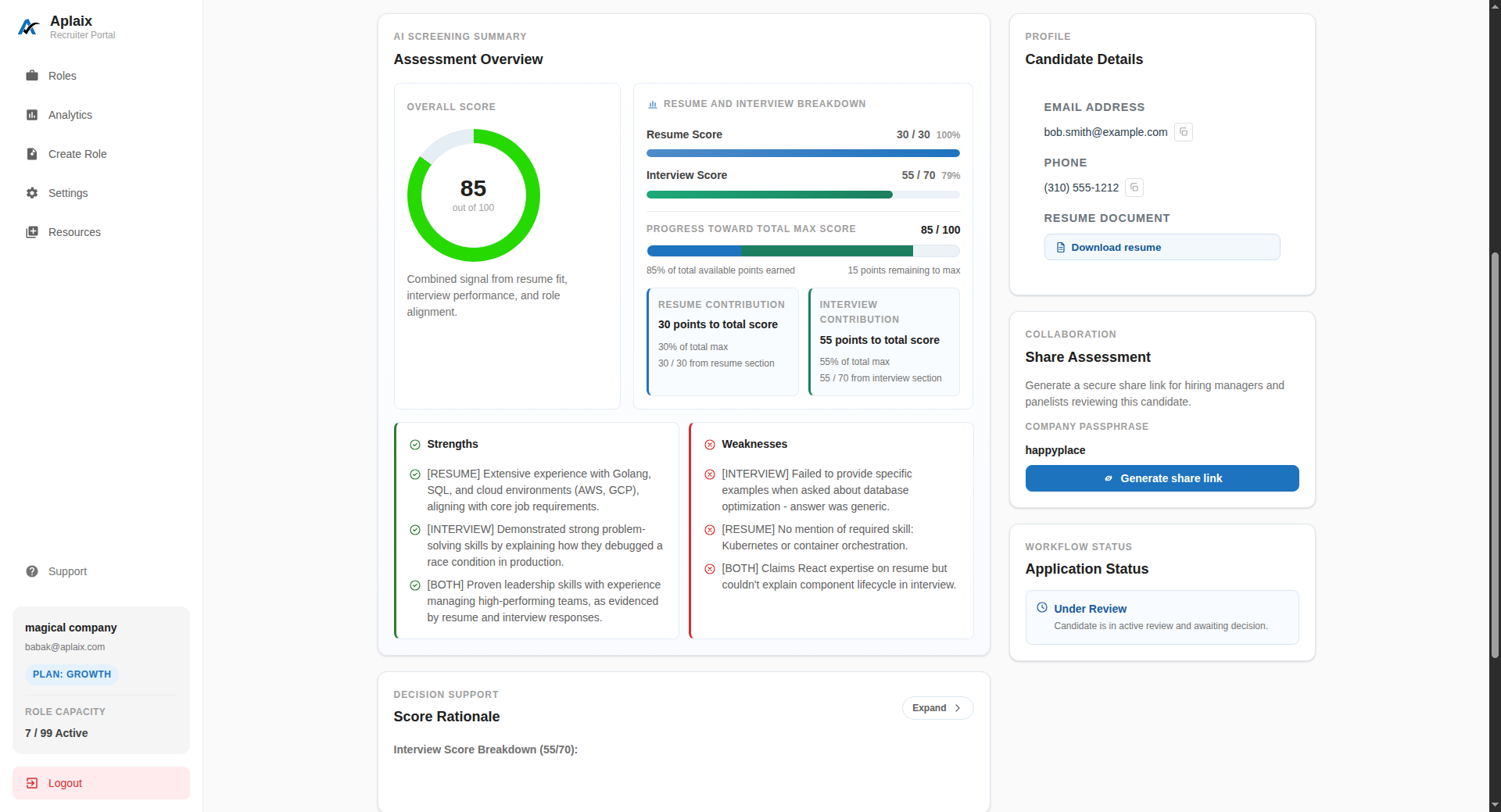
The score is shown as parts, not collapsed into one number
Resume contribution and interview contribution are displayed separately, so a decision maker can see which source is actually carrying the score — and disagree with either one. The score rationale is visible, not hidden behind the number.
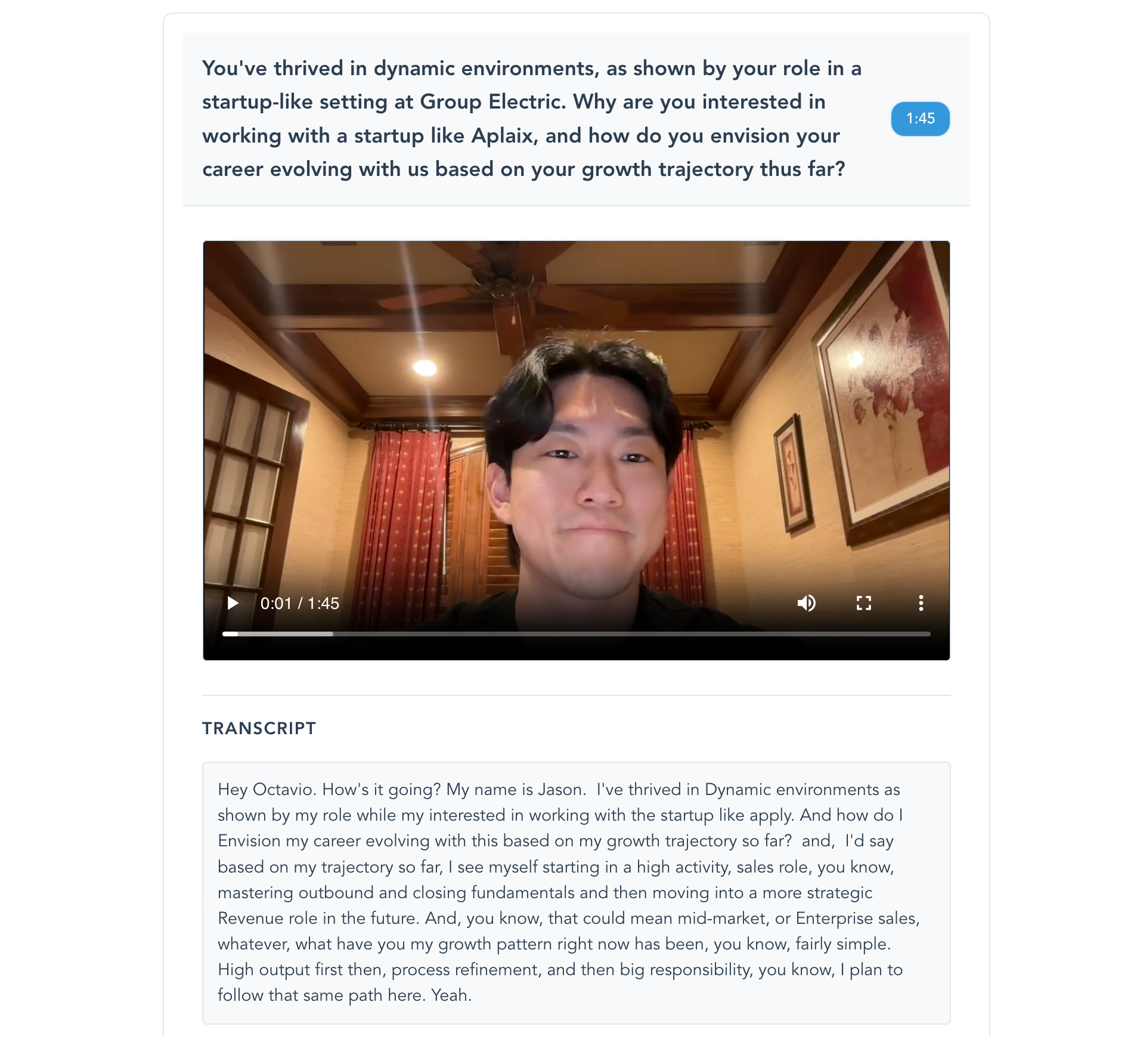
Full transcript alongside video (detail)
What It Doesn't Do
What it doesn't do
The assessment is generated automatically when a submission comes in — not when a recruiter opens it. But generating an assessment isn't deciding: nothing advances, rejects, or shortlists anyone. Each submission is assessed against the role on its own; there's no ordered list, no ranking, no sorting candidates against each other. A recruiter reads the evidence and decides.
No video or audio is analyzed. The AI receives the text transcript of the candidate's answers, the resume, and the text of the role — nothing about delivery, tone, or facial expression is evaluated.
See the full argument for who makes the decision →Read the evidence yourself.
Post a role and see a real assessment, source tags and all.
Start FreeNo credit card needed